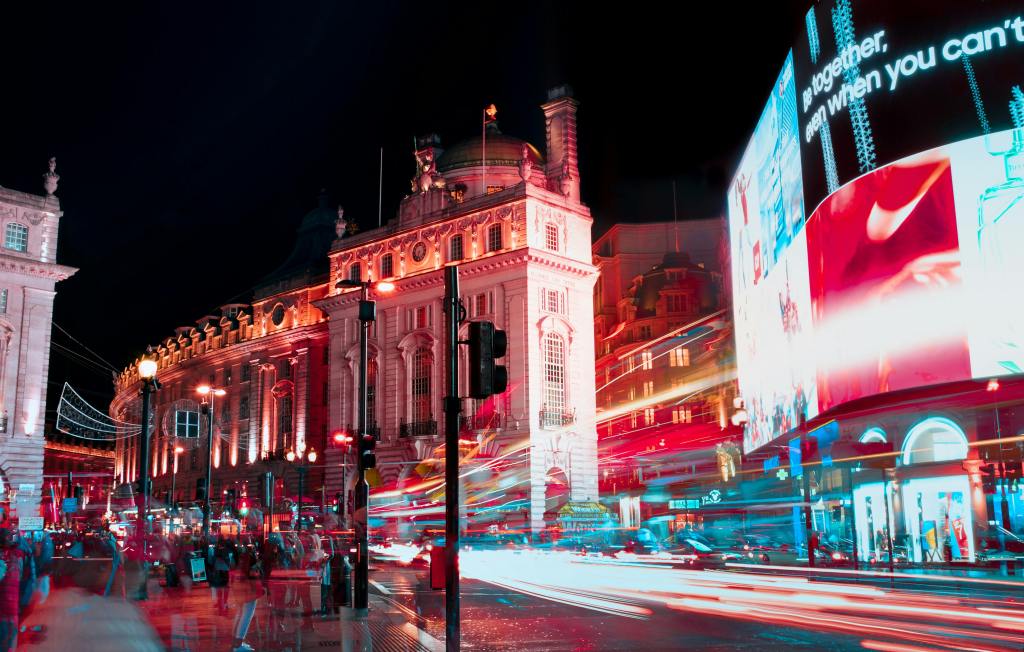
I hate the Piccadilly crowds.
You hate the Piccadilly crowds.
Everyone hates the Piccadilly crowds.
Let’s escape them, without escaping Piccadilly.
The good thing about London crowds, is that so many of them are only here the most touristy attractions of all. Which means that if you walk away from the mosh-pit that is Piccadilly circus and Leicester Square, the crowds will almost instantly vanish. Even on Piccadilly itself, one block from the famous roundabout and, though still crowded, it feels like the crowd has at least halved! Turn down a side street, and suddenly you’ve gone from being a sardine in a can to a fish in an aquarium. Okay, that may been the worst sounding analogy you’ve ever heard, but at least you’ve heard it.
With that word of reassurance, lets plan a route exploring Piccadilly, beyond the madness;
Piccadilly Circus
👤👤👤👤👤
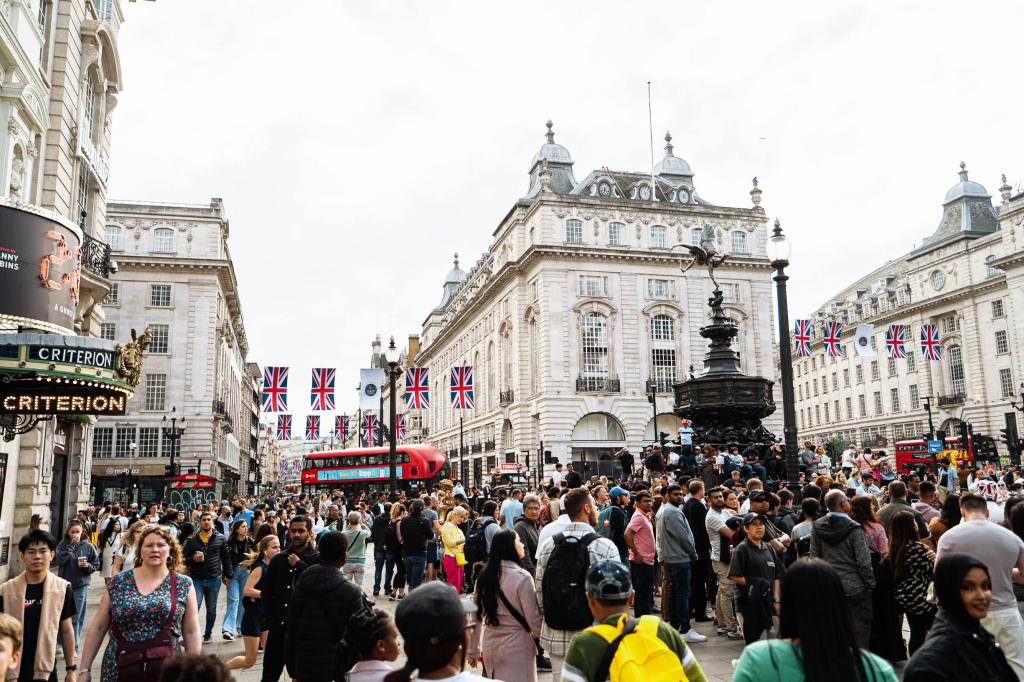
Get off of the tube here and…
RUUUUUNNN!!!!
Hatchards
👤👤👤
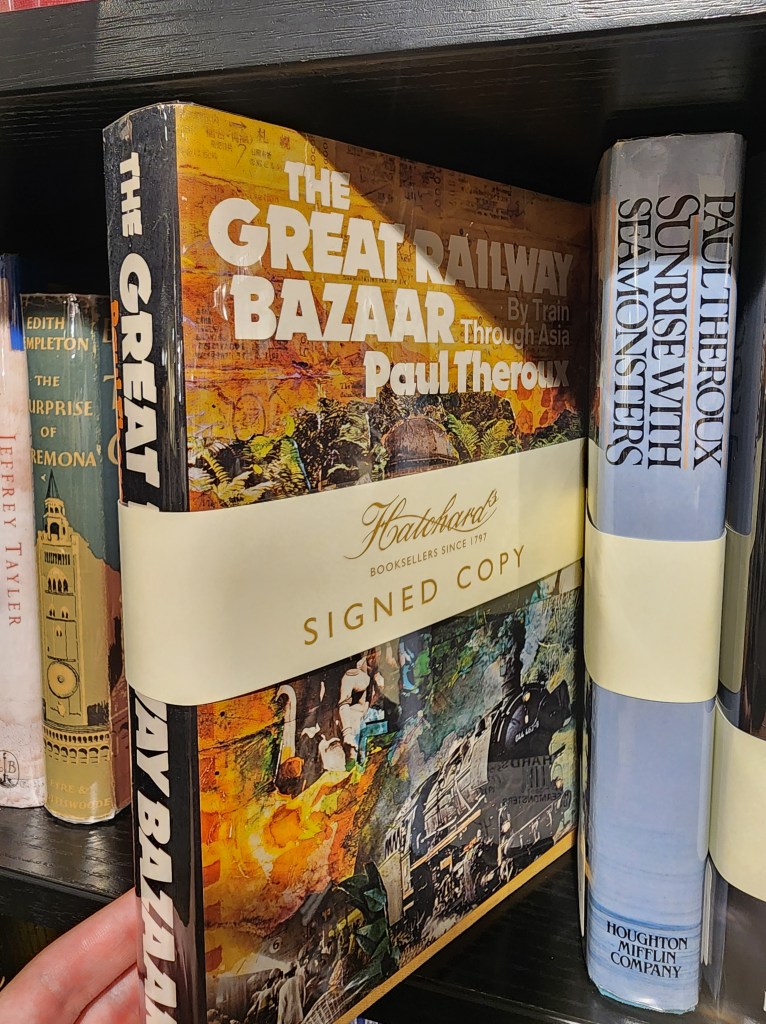
Just 100 meters of walking fleeing down Piccadilly street, and you’ll already see just how much quieter it is. Mind you, it’s still quite busy (just not compared to the circus itself), so let’s duck out of the street into a place where silence is golden; a bookshop!
Wait, it’s still kind of busy in here… that’s because Hatchards isn’t just a bookshop, it’s an institution! And every tourist mum trying to convince their kid to drop the tiktok for a minute and pick up a book (there are a lot, trust me), is treating this store like it’s the last place that paper hasn’t been outlawed in.
That being said, though not a must, Hatchards is a great store and worth popping into if you like book shops with lots of stairs.
Paper’s Last Stand: A novel by Yosef Citron.
Fortnum and Mason
👤👤👤👤
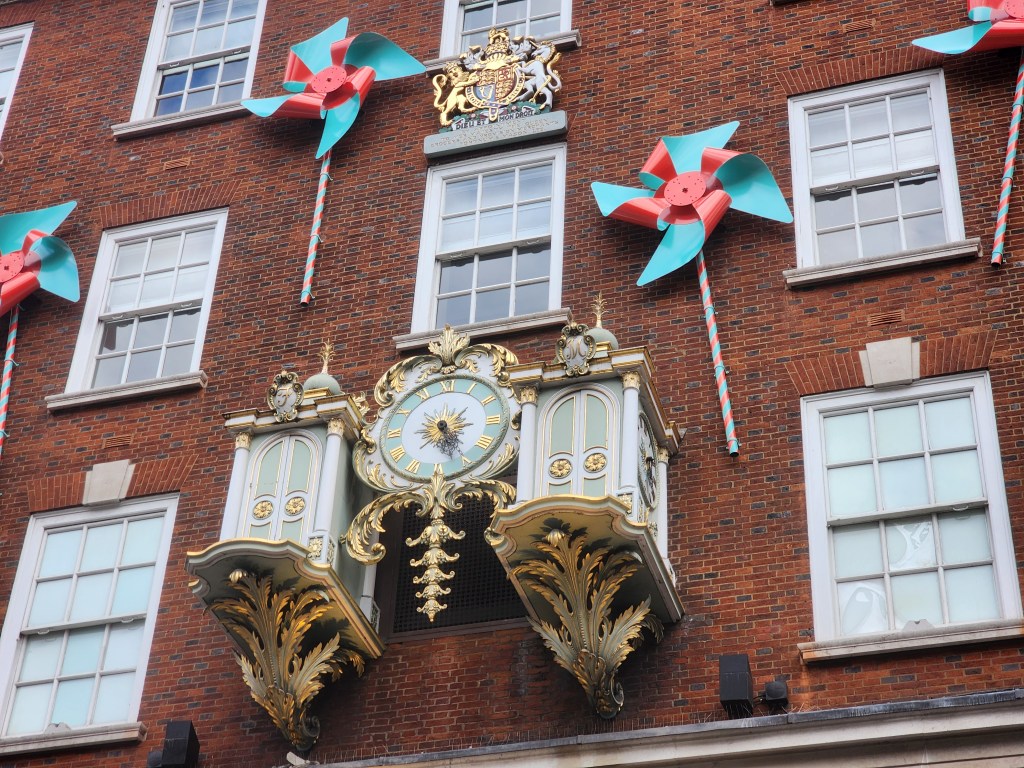
One of the most famous stores in the Piccadilly area, and in the entire London in fact. Since opening, they have had “involvement” in some major world events (If you count sending hampers as involvement) including the Suffragettes, WWI, and the unsuccessful 1922 Everest expedition. Nowadays, it’s a grandly impressive place, though quite pricey, with a super iconic clock. It may be busy, but it’s definitively worthy of a few minutes of your time.
St. James Square and Street
👤👤
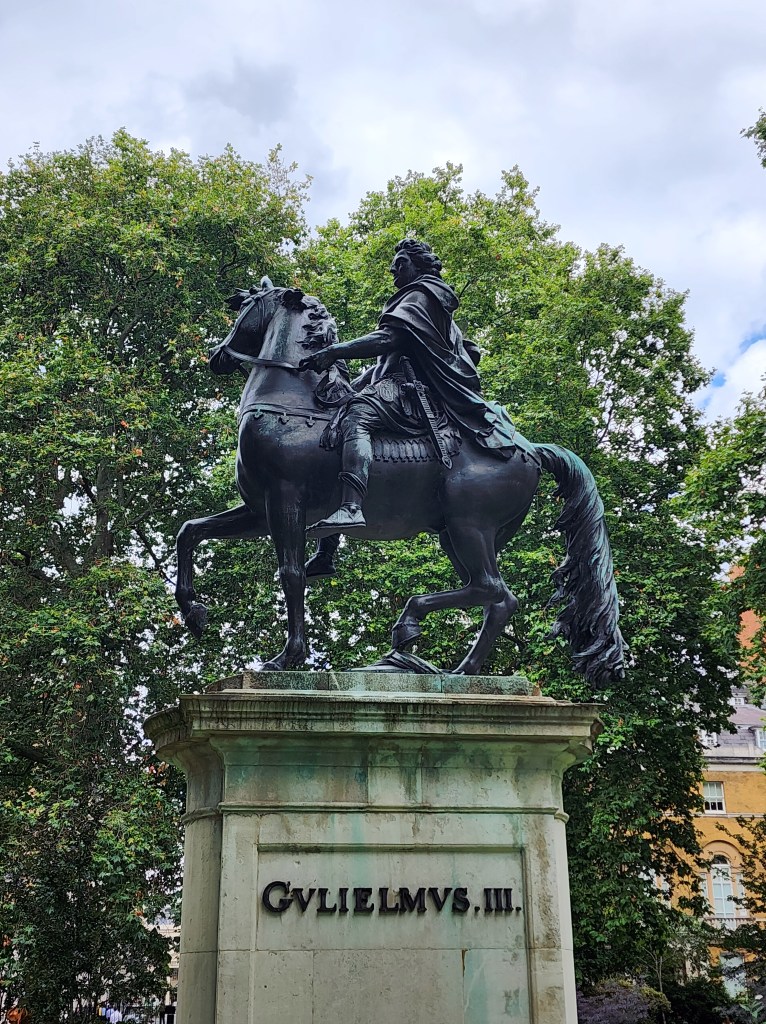
A simple but important space. The houses surrounding the square have housed no less than three of the UK’s Prime Ministers, and multiple dukes, earls, and dignitaries.
In the centre of the square is a statue of William III on his horse. Looking closely, you can see that the sculpture added a small molehill right in front of the horse. This little molehill is what caused the king to be thrown from his horse, resulting in his death. Though there isn’t much else to see in the square, it’s a somewhat quiet place to relax and perhaps have a small picnic, and it often houses small displays of art. When I was last there a small collection of abstract sculptures was being displayed. Muy Bien.
Burlington House
👤👤👤
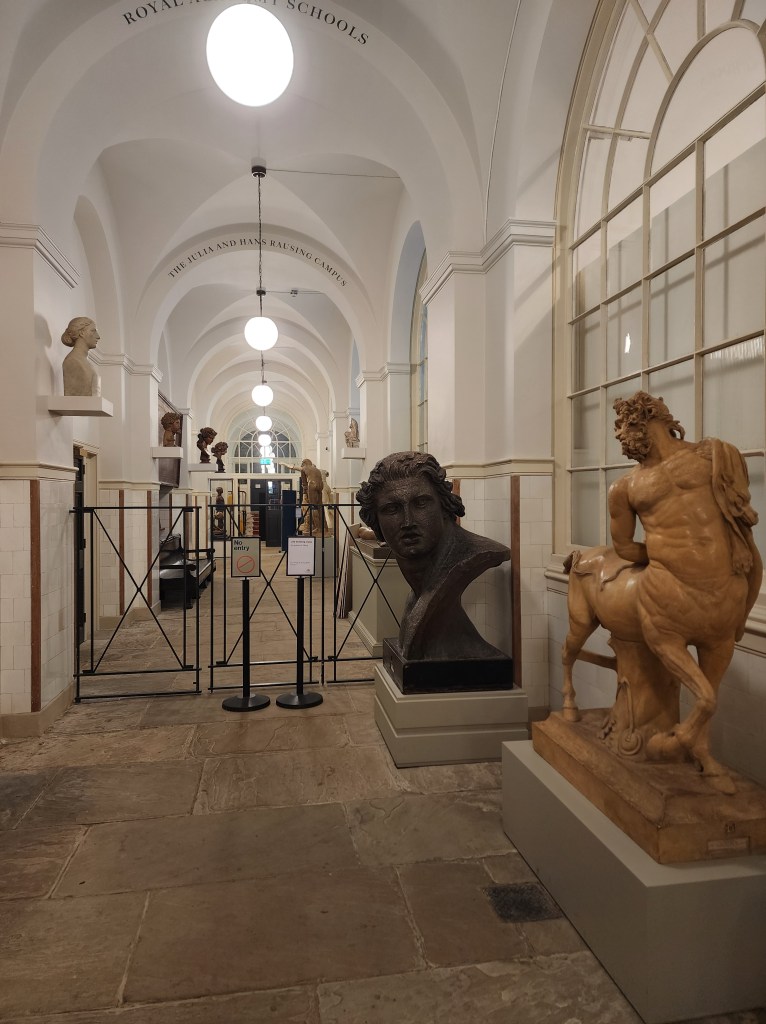
This massive, grand building was originally built as a wealthy lawyers private home. Now, it houses the Royal Academy of Arts, one of London’s premier art galleries. The Academy has plenty free displays and exhibitions, as well as plenty ticketed exhibits. These exhibits (both the free and ticketed), are regularly switched up, keeping the content fresh. Every time you visit, you’ll something new to discover.
Burlington Arcade
👤👤👤
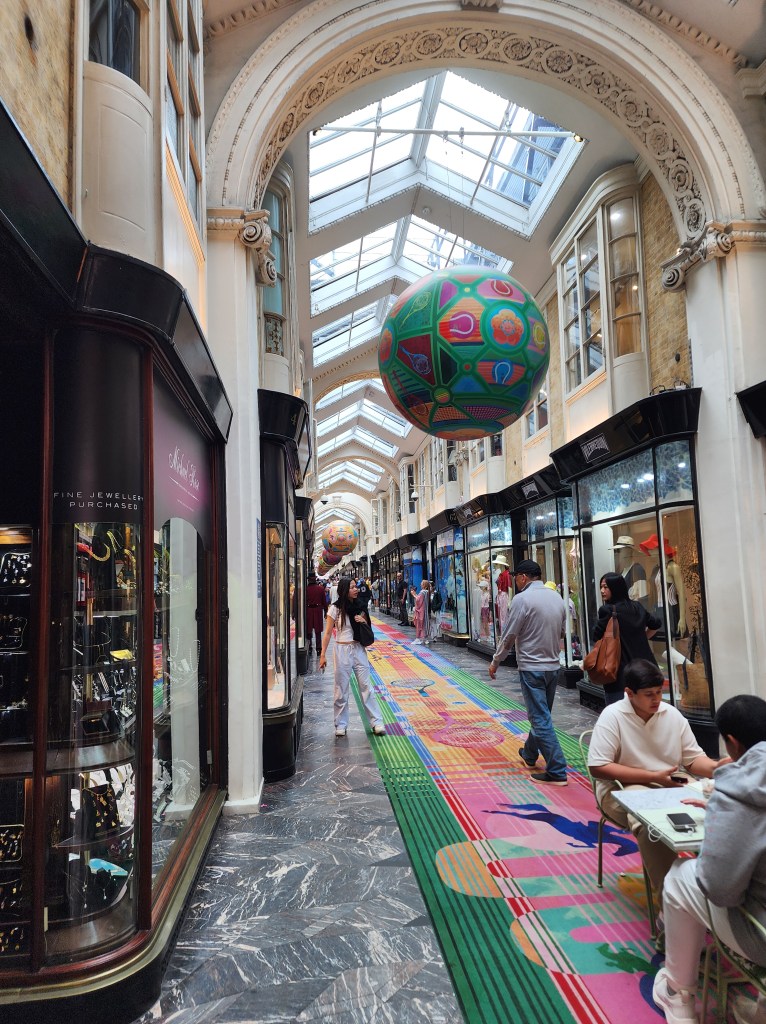
The famous journalist George Sala described the Burlington Arcade as such; ” A booth transported bodily from Vanity Fair. I don’t think there is a shop in its enciente where they sell anything that we could not do without.” In modern English, that translates to; “A bunch of stores selling the most extra, vain things you’ve ever seen” While perhaps that’s not entirely true these days, Burlington Arcade remains somewhere you go as an activity itself, and not to shop.
That being said, it’s a very historic part of Piccadilly, and they even have their own police force, the Burlington Beadles! This is actually the smallest private police force in the world! See if you can spot them.
The arcade is lined with small stores selling jewellery and leather goods, as well as a couple cute cafes.
The Royal Institution
👤

Maybe I was lucky on the day, but when I dropped by the Royal Institution there was practically no one there aside from the staff and myself! Which was crazy because the Royal Institution is such a cool little museum.
The Royal Institution was, and is, a scientific institution dedicated to research and public education. No less than 10 of the elements on the periodic table were discovered or isolated by scientists at the RI!! The RI also was famous for hosting scientific talks and shows for the public. The Christmas lectures were so popular that they caused their own traffic!
Nowadays, the Royal Institute still holds many workshops, shows and lectures for all ages, which you can find here. Throughout the week, the RI is open to the public; You can walk through many of the upstairs rooms, including the theatre which held/holds the iconic talks. Downstairs is a small museum on the RIs’ inventions and discoveries. You can even see Michael Faraday’s lab! For those who are unfamiliar, Faraday is known as the “Father of Electricity” so yeah, he’s a big deal. He also invented the rubber balloon, which we all know, was equally important to the advancement of the modern world.
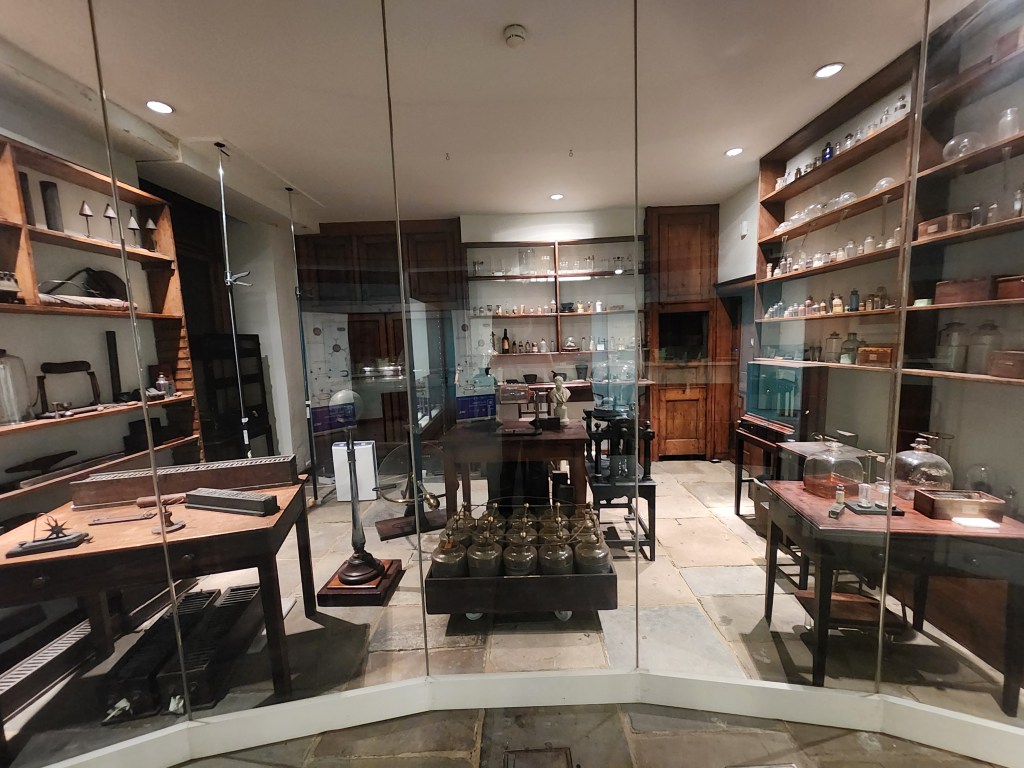
Oh and of course; it’s free.
Saville Row and Heddon Street
👤👤
Just a couple minutes walk from the RI you’ll find these two iconic streets. Saville Row is a short street famous for its many top-notch tailors including Huntsman and Sons, the tailor shop which served as the inspiration for the Kingsman movies and used as the filming location for the tailor shop scenes (sorry, no secret basement here I’m afraid).
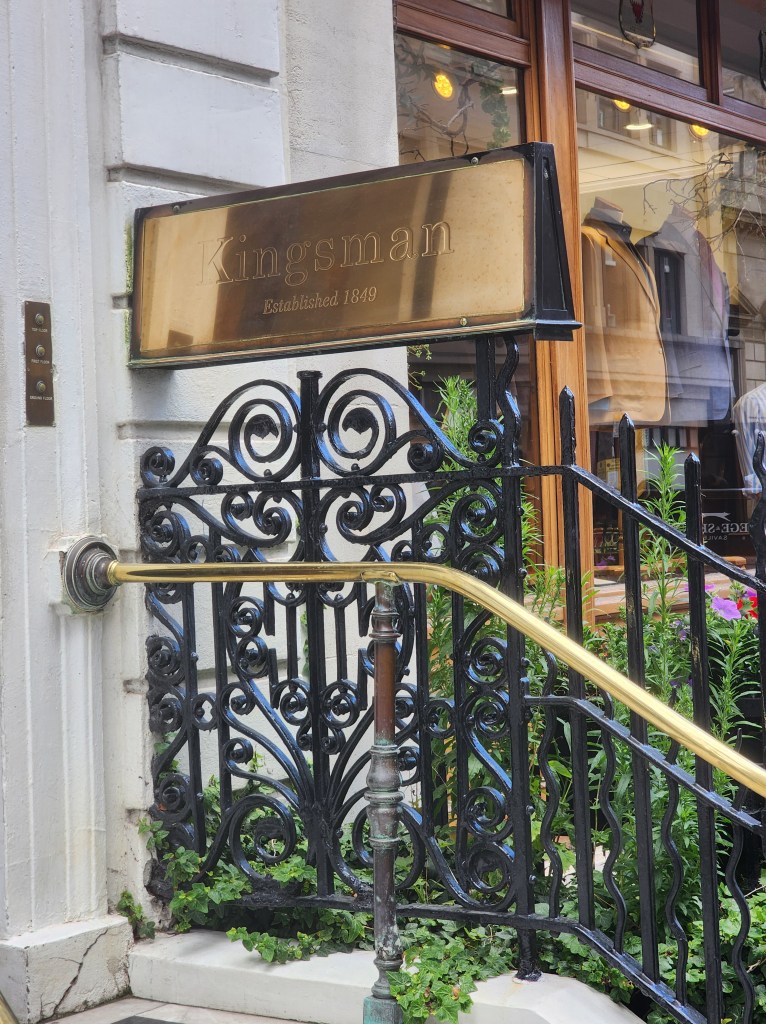
At the bottom of the street you’ll find the building upon whose roof the Beatles played their very last concert. There’s not much to see besides a simple blue plaque and gazing up at the roof (spoiler, it looks like any other roof on the street), but it’s worth a quick stop because well… Beatles.
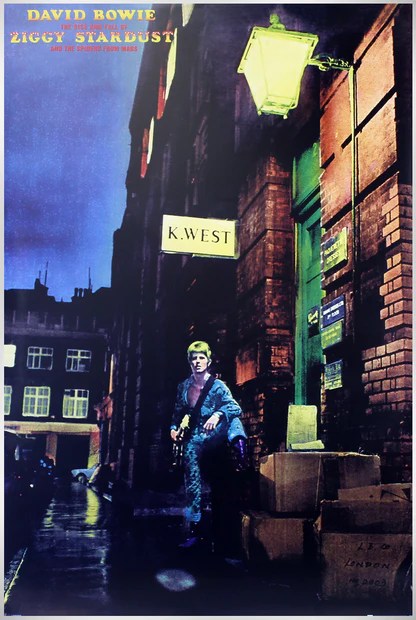
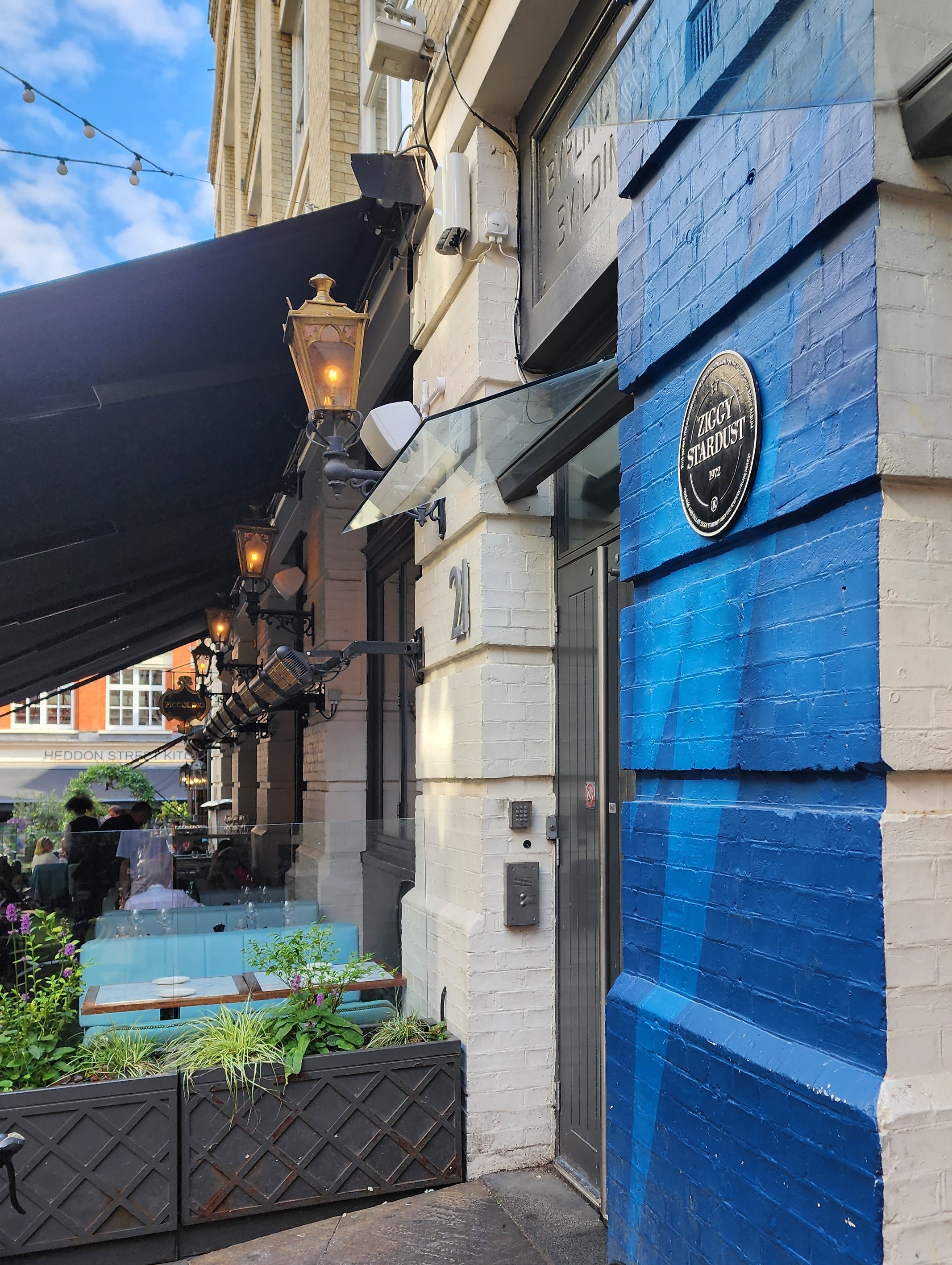
Around the corner is Heddon Street. A short, pedestrian-only street also made famous by a legend of the music industry; this time, David Bowie. Bowie used the street as the iconic album cover for The Rise and Fall of Ziggy Stardust. Many of the streets stores and restaurants have been named with Bowie related words (“The Starman”, “Ziggy Green”), and through the street you’ll find many small pieces of artwork dedicated to the legendary musician.
Use my personalised map
I’ve made a complimentary map to use with google maps showing you all the mentioned points of interest along with some extra (that are cool but I’m too lazy to write about).




 Sitch Travels
Leave a comment