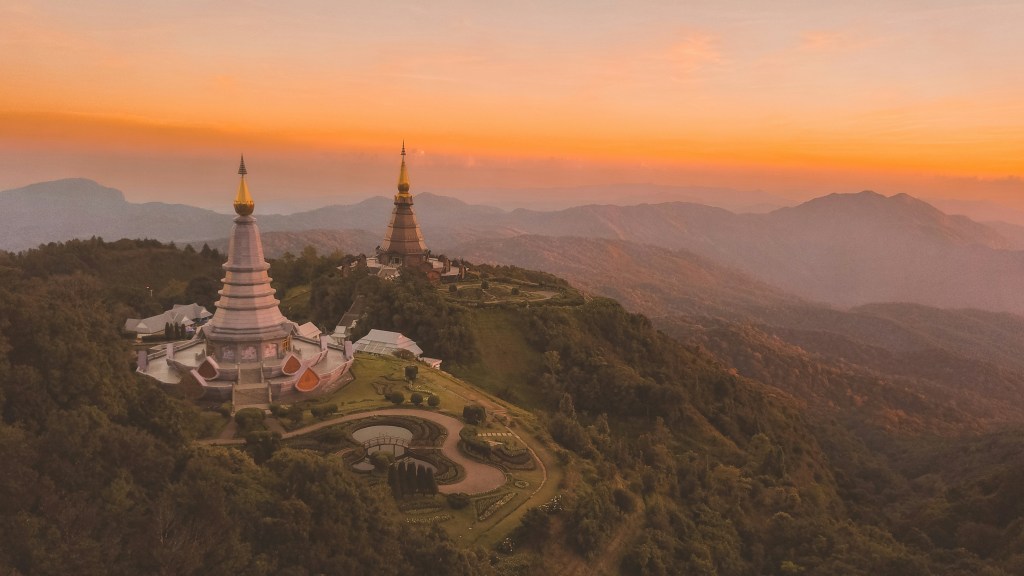
Chiang Mai holds a special place in my heart. It was my first destination on my trip around South East Asia, and it set the tone perfectly for the rest of my trip.
From my first morning, which, having hit the sack at 4 pm the night before, started at 5 am (yeah I know, I was exhausted), Chiang Mai felt magical to me. Perhaps it was watching the city wake up and come to life is what made me fall in love with the place, or maybe it was those shining golden roofs from the many temples. Whatever it was, I want to impart some of it to you.
- How Long to Spend in Chiang Mai
- When to Visit Chiang Mai
- Getting Around
- Five Day Itinerary
- Where to Stay
- Where to Eat
- Download my Map
In this itinerary, I’ll give you an idea on how to spend five days in Chiang Mai, not ram packing your days with action but not sitting around either. Of course, if you’re more of a fast paced or slow paced traveller, you can simply compact or stretch this itinerary. I personally spent seven days here and could have spent more.
That being said…
How Long to Spend in Chiang Mai
There’s no right answer. Chiang Mai is one of those places you can spend an eternity in or just a few days depending on each person. If I had to give a straight answer, I’d say four or five should be a good amount of time to get through all the main highlights without feeling rushed. Hence why this itinerary is for five days.
If you’re coming in for any of: the Lantern Festival, the Flower Festival, or Songkran (the water soaked Thai New Year), you’ll want to leave a couple days dedicated to the festivities in addition to four/five for exploring.
When to Visit Chiang Mai
The best time to visit Chiang Mai is from November to February, when the weather is pleasant and dry. November is when you’ll find the enlightening Lantern Festival, while February is when you’ll find the blooming marvellous Flower Festival. From late February to early April is the burning season, which means there’s a lot of air pollution and that it’s super hot. Mid April is Songkran, the massive Thai New Years bash which is basically one chaotic, week-long, water fight. Yes, a water fight. 🤩

June – October is the rainy season. It will rain a lot, and can get quite hot and sticky. If you can brave that, you’ll be rewarded with far less crowds, and cheaper accommodation. Just beware of flash flooding. June and October are usually not as bad as the months in between.
Getting Around
Walking: Getting around the old town on your own two feet is easy enough. Most of the historic centres temples, walking streets, cafes, museums, etc… are in relatively close proximity to each other. Pavements can be quite narrow though, and crossing the road an adventure in itself. That’s why sometimes the next option may suit you better.
Grab and other ridesharing apps: South East Asia’s alternative to Uber, Grab is an affordable way to get around town when you’re not in the mood of walking. In addition to cars, you also can hitch a ride on a Grab Bike! A driver will come by, hand you a helmet, you’ll jump on the back of his or her seat, and you’ll be whisked away to your destination. Grab bikes are far cheaper and can weave in and out of traffic so they’re definitely the better option if you’re going somewhere alone and without much baggage. I genuinely wish they had this service in Europe. Alternatives to Grab are Bolt (cheaper but less availability), and InDrive (agree on a price on the app).
Songthaew (shared transport): These red open back trucks which look like giant tuk-tuks are one of the best ways to get around Chiang Mai. You simply wave one down (or if they’re parked, just approach the driver, as long as he’s not resting) tell them where you’re going, get a price, and decide whether or not to hop in. The standard cost for a ride within the historic town is 30 baht, other neighbourhoods in the city 50 baht, and to go out of the city upwards of that (for example 60 baht to Doi Suthep). Many popular attractions, such as Doi Suthep, will have constant Songthaews going back and forth from the historic centre. The best place to find these are on roads next to the moat which circles the old town. Just outside of the gates in particular is where you’ll have the most luck.
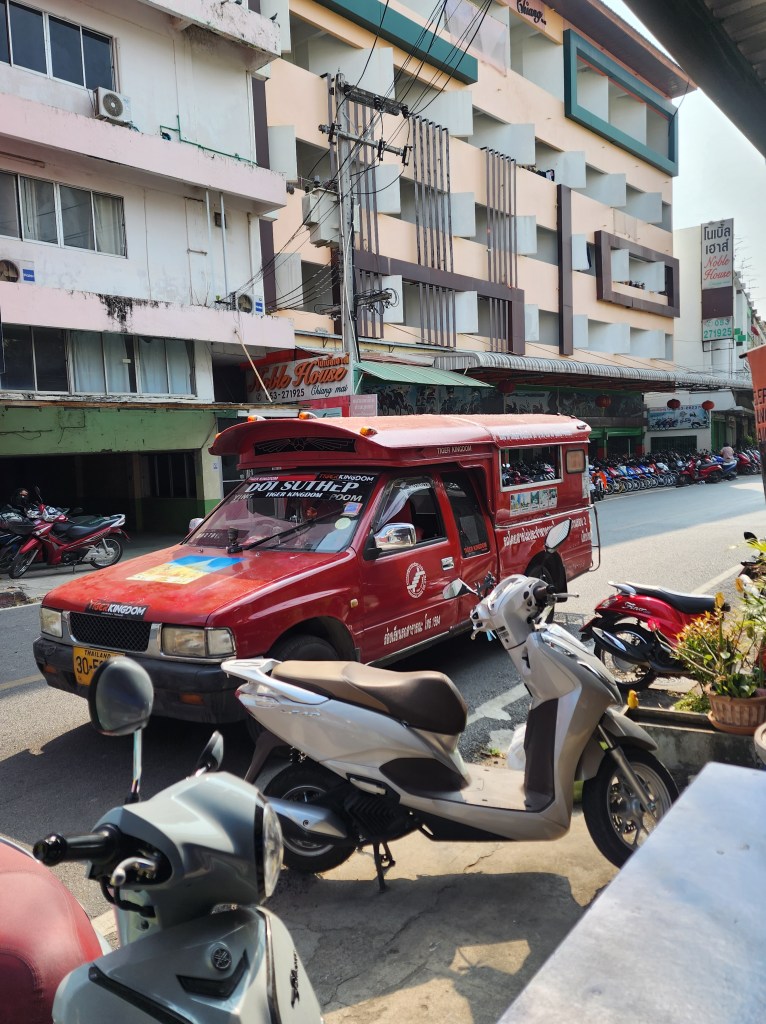
A great option if you find others going to the same spot as you is to hire a Songthaew for the entire trip. For example, when I joined a group of ten people from my hostel going to the sticky waterfall, we simply found a parked Songthaew waiting for passengers, asked him if he was able to take us to the falls, and quickly agreed on a price of one thousand baht. Once we arrived at the falls, he waited a couple hours for us to take us back to the city. On the way, we asked him to make a detour to a cafe (Dantewada, see day three of the itinerary), to which he agreed for a fair price of 300 baht extra. Split by ten, we paid 130 baht each for a couple hours of driving, so I’d say it was more than worth it. If you like a driver, you can ask for their number and organise for him to take you on your next trip.
Motorbike/Scooter: If you like complete freedom over where you go, renting a moped may be your best option. Especially if you’re trying to reach further out places such as Chae Son National Park. Scooter rentals usually start at 200 baht per day, 150 if you’re renting for a few days. Make sure you have your drivers license and photo ID with you, and wear your helmet at all time. If you get stopped without an international license, you’ll have to pay a fine of 200-400 baht. Don’t ride without insurance.
Car: I haven’t actually heard of anyone renting a car in Chiang Mai. That being said, there are rental companies and a car could be a good option if you’re a family with a lot of baggage (though, with the contents of my blog, I’ll assume you’re not).
Five Day Itinerary
Here’s what you’re here for, my recommended Chiang Mai Itinerary! I’ve only made a day by day itinerary for the daytime, as I feel like the nighttime activities can be done on any night so I’ve made a list of them at the end of the itinerary. I’ve also added a small list of things to do if you want to discover even more of Chiang Mai.
Day 1 – Exploring the City
Start your time in Chiang Mai by getting to know the city. With its array of temples, museums, and unassuming but chic cafes, it’s truly a city you can lose yourself in.
Start in the morning by heading to the two largest temples, Wat Chedi Luang and Wat Phra Singh Woramahawihan (don’t worry, I can’t pronounce it either). Getting there in the morning will help you beat the tour groups which mob the temples from the early afternoon. Chedi Luang was the far better experience for me, partially because we made it there before the crowds and the heat (unlike Wat PSW (I’m not spelling that out again)). There’s a 50 baht entrance fee, and there are probably close to a dozen temples to enter (I didn’t count lol), as well as its >700 year old Chedi. The best part, however, was the Monk Talk, where some talkative monks sit around to enthusiastically answer any questions you may have and ask a couple of their own. They’re super friendly and up to chat, so ask away.
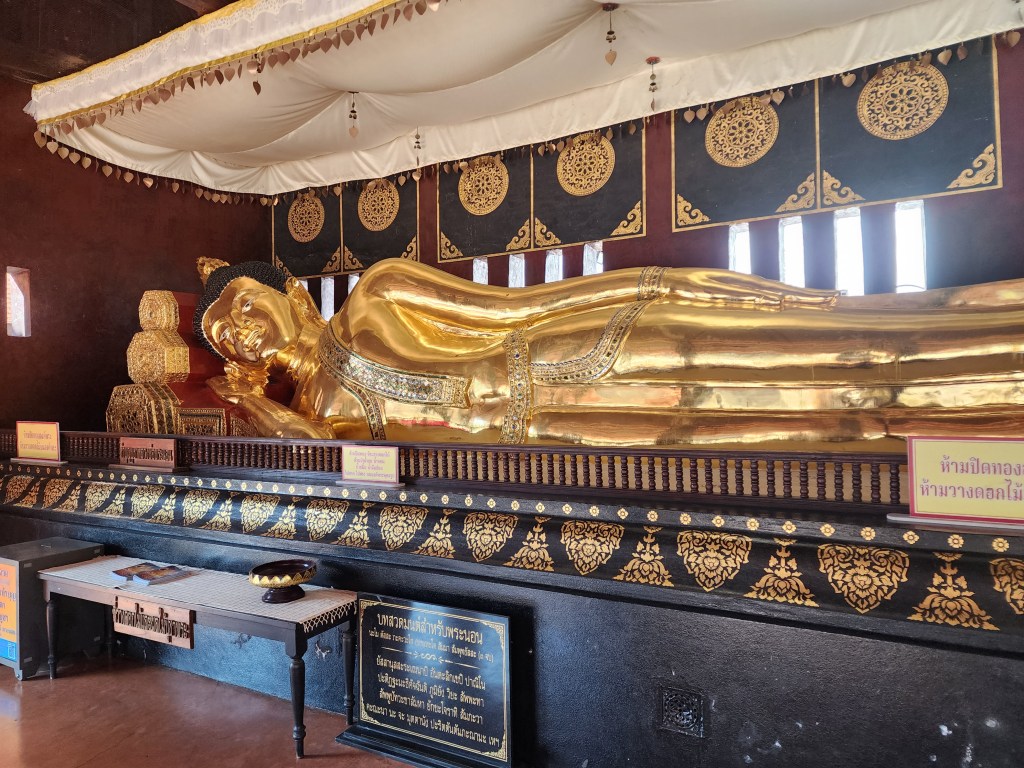
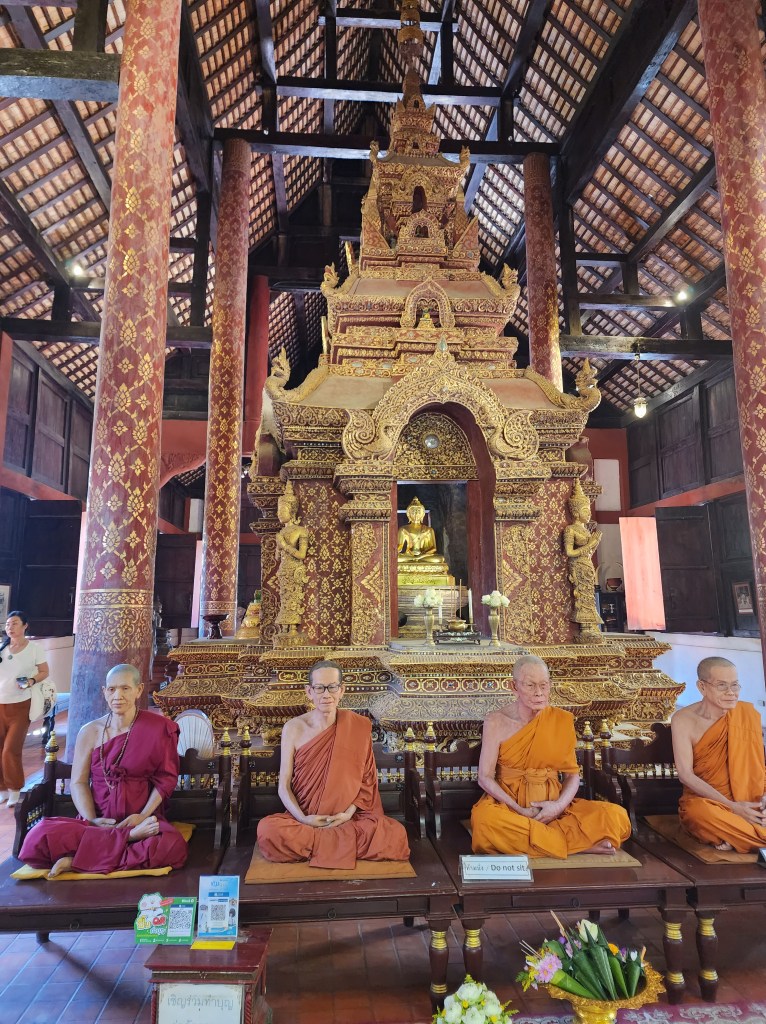
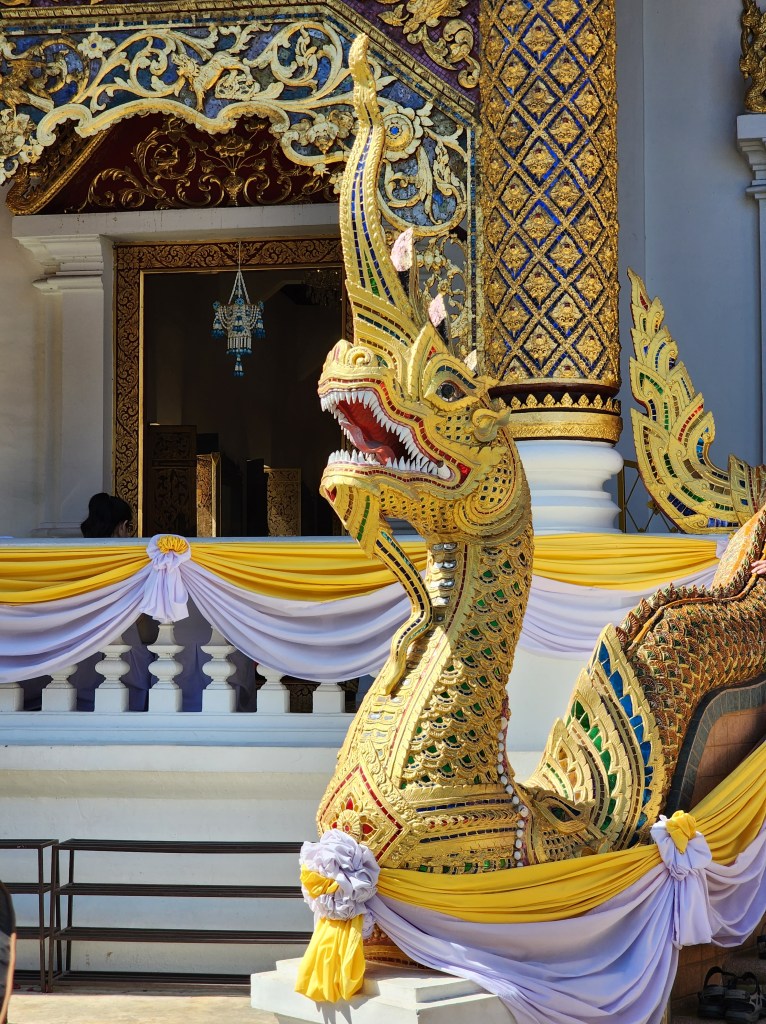
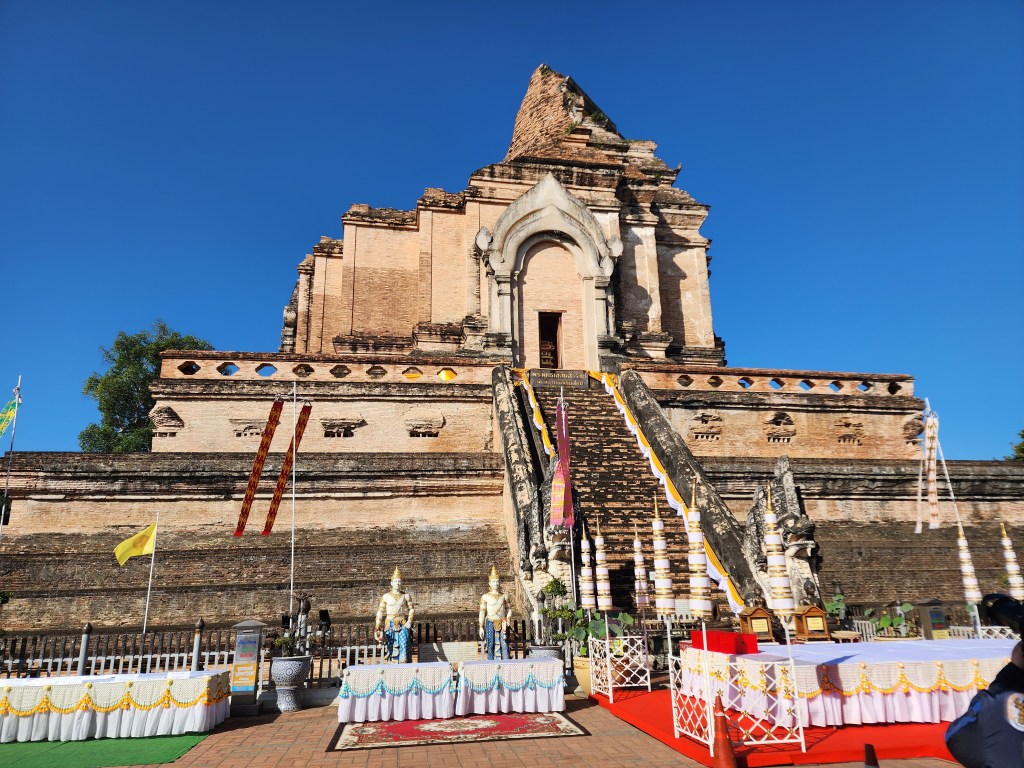
Wat PSW is free, but it’s busier and there’s a bit less to see. It’s still definitely worth your time though, as it’s arguably more picturesque and maybe even a bit more grand.
Wat Chedi Luang
Cost: 50 Baht
Time needed: 60-90 minutes
Notes: Wear respectful clothing (shoulders and knees covered), and remove your footwear before entering shrines.
Wat Phra Singh Woramahawihan
Cost: Free
Time Needed: An hour
Notes: Come before noon to beat the large crowds. Wear respectful clothing (shoulders and knees covered), and remove your footwear before entering shrines.
Once you’ve got those two out of the way, just wander the old city. You’ll find things to see and do around every corner, and there’s no shortage of food and drink if you get hungry.
Some cool spots to check out:
- Lanna Folklife Museum
- Arts and Cultural Centre – 90 baht
- National Museum – 100 baht
- Wat Chiang Man – Free
- Nong Buak Haad Public Park – Free
Day 2 – Gentle Giants and some mountain exploration
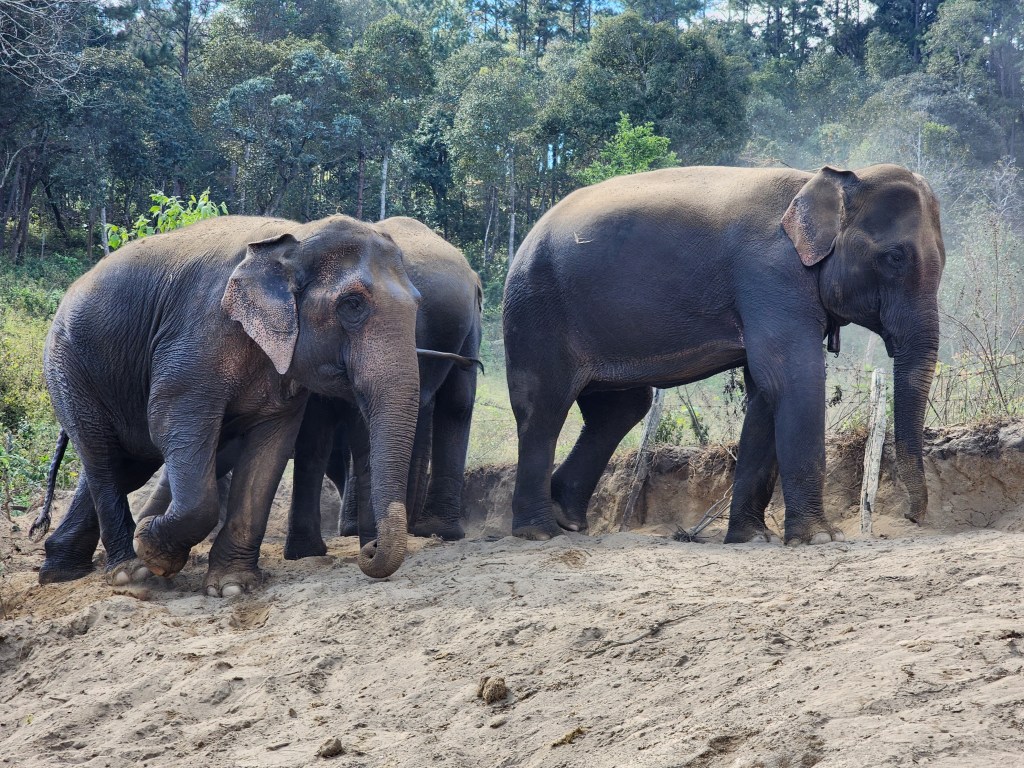
The two main crowd-bringers Chiang Mai has to offer; Elephants and Mountain Top temples, are actually best combined into one action-packed day.
Elephant Sanctuary
Starting in the morning, head off to one of the many Elephant sanctuaries Chiang Mai has to offer for a morning experience. There are many to choose from but please do your research into your chosen sanctuary before going as many of them are notorious for mistreating the elephants and well frankly, I love elephants. Now I’m not Dr. Ethical myself so I’m not going to tell you which sanctuary to go to and what’s right/wrong but in general, riding the elephants is definitely not right, plus those sanctuaries that offer riding are usually the ones who mistreat the elephants in general. Washing and feeding the elephants are more of a grey area but if you want to interact like that I’d recommend Living Green Elephant sanctuary (who I went with) because their elephants have been rescued (a couple were circus elephants) and are treated well, they only have a couple of interactions a day (or so claimed the guides), and only interact if they feel like it, plus they have a large space to roam.
Doi Ithanon
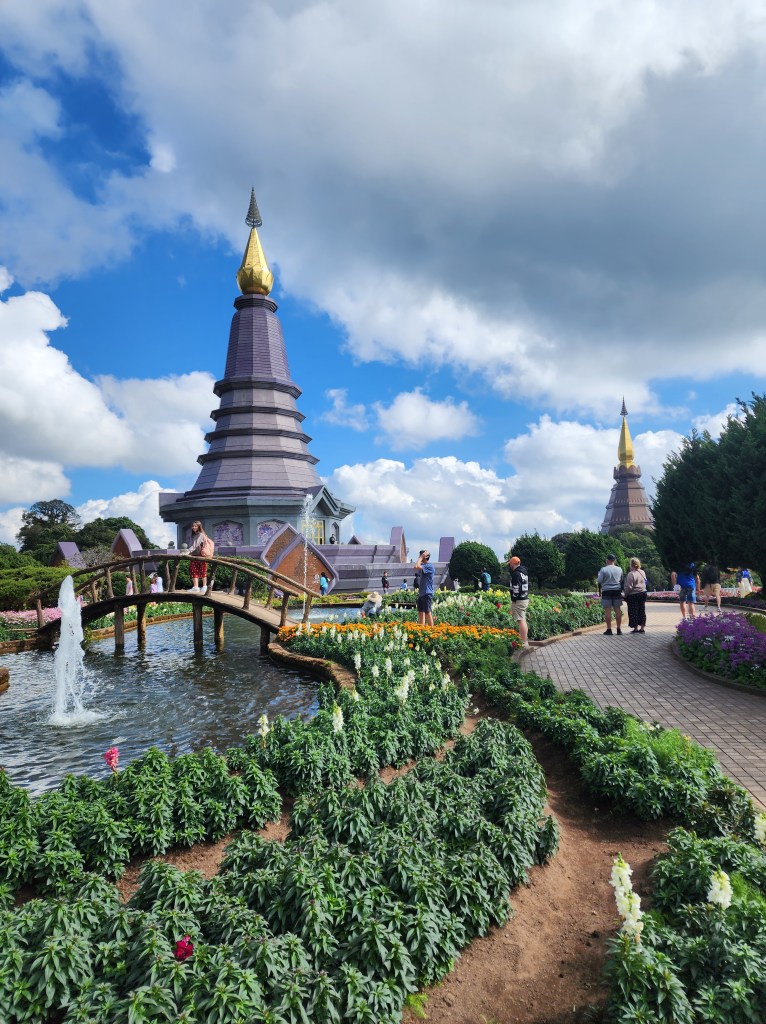
After your elephant experience, head to Doi Inthanon National Park, where you can drive up to the highest point in Thailand, and see the majestic Twin Pagodas (one is for the late queen, one for the late king).
Nature Trail
From the Twin Pagodas, head down to the Pha Dok Siew Nature Trail (please note, you’ll need to hire or have a guide for this trail). This wonderfully short and sweet hike takes you through the forest, past a majestic waterfall, and over scenic rice terraces, before ending in a “coffee village” of the Karen tribe. This Coffee village was for a long time actually an Opium village! You can learn about the village’s wholesome transformation from the local guide, who’ll also bring out teas and coffees galore for you to taste.
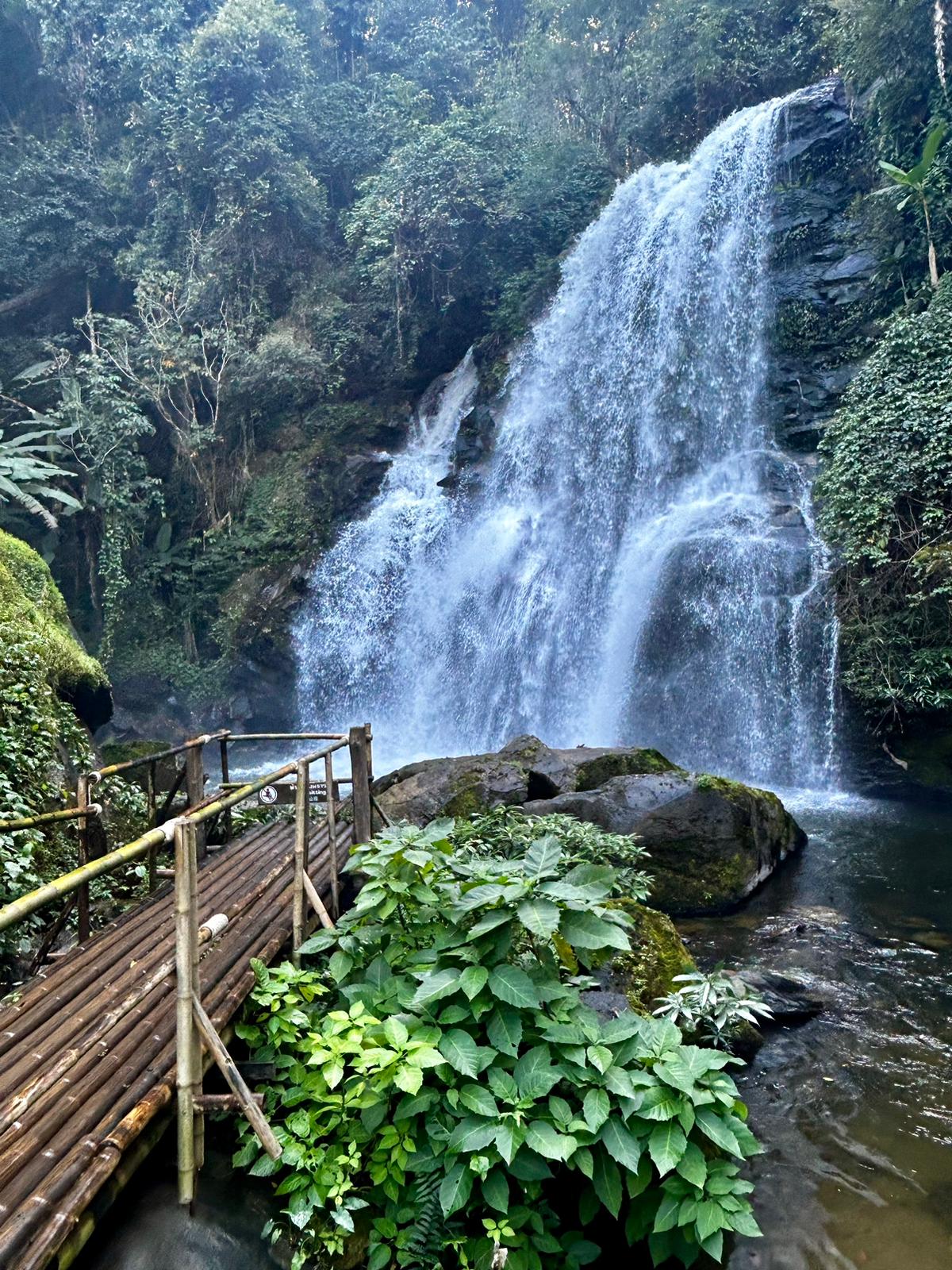
Finally, the main part of your day is done. Make the long drive back to Chiang Mai for some well-deserved rest (or a well-deserved beer).
Now, how to pack all this into one day? Well, option A is to do it yourself by renting a car, motorbike, or scooter. Option B is to go on one of the many combo tours available from town. Now I’m not usually a fan of these very touristy, packed-in tours, but in this particular case, I found it the obvious choice. First of all, the full package tour was (surprisingly) cheaper than just doing a half-day elephant sanctuary without Doi Inthanon and the trek, so if you were planning on going to an elephant sanctuary, this is an obvious choice. Also, the dirt roads leading to the elephant sanctuaries can be a nightmare to drive on, and the traffic of Chiang Mai is equally frustrating. Lastly, going on a tour gives you a chance to meet great new people, and you won’t have to stress about finding a guide for the nature trail, both of which are massive pros.
A standard tour including all of the above with Living Green should set you back $65 if you book from town. They also have a similar tour which swaps the hiking for bamboo rafting if you’re looking for something more relaxed (the hike is quite easy but it is, after all, a hike).
Help me reach 100 subscribers by 2026!
Day 3 – Sticky Waterfalls and Stickier Rice
Sticky Waterfall
There’s no better way to start your day than a refreshing shower… in a waterfall. After getting some breakfast, hop on a Songthaew (see Getting Around section above) the Bua Tong, AKA; “Sticky Waterfall.
When you arrive at Sticky Waterfall, you’ll be at the top of the upper falls. Before heading down to the lower levels, be sure to check out the natural spring, Chet Si, just to the left of the main waterfall. The spring is considered sacred, so only go if you can cover yourself appropriately. You can’t swim in this pool, but it’s only a couple minutes’ walk so you might as well see it.
Once you’ve seen the spring, head back to the waterfalls and head down the steps to the right of the falls. It’s much more fun to start from the bottom and climb your way back up. Before heading down, you can leave your footwear at the top (you’ll see a couple of shoe racks and more than a couple pairs of shoes), as you can climb the waterfalls perfectly fine barefoot, and it’s more fun. My entire group and I left our sandals and some bags at the top; it was all untouched when we returned an hour later.
Climbing the falls is an absolute blast, and should take you around an hour, including plenty of time for pictures and relaxing in the water.
Dantewada
After drying up, you can get something to eat from the small cafe at the car park or hop back in your Songthaew to return to Chiang Mai. If you like cute cafes, there’s a place called Dantewada near the waterfalls that you can visit. You’ll have to pay the driver more of course, so be sure to agree on a price before asking for a stop.
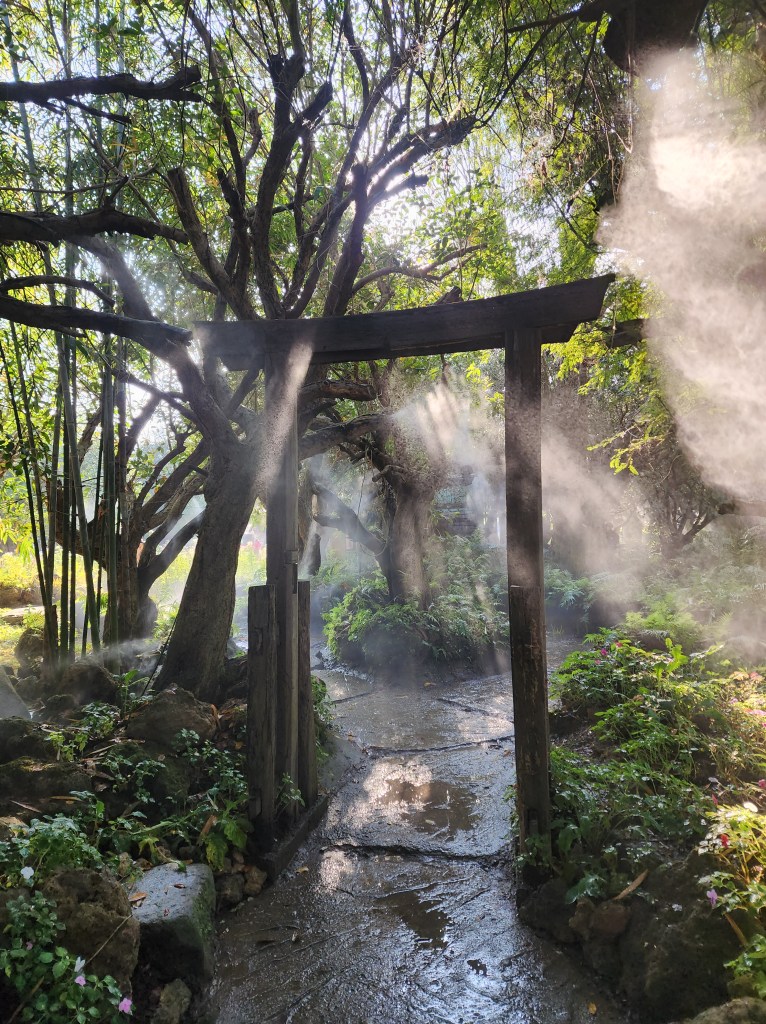
Dantewada is basically a pretty garden on steroids. There are a couple of man-made waterfalls, a flower garden, some cute goats, and tons of little photo opportunities. It’s what I’d call an “Instagram Cafe”; quite artificial but still cute.
Some other “Insta Cafes” are: PLUTO Cafe, Chom Cafe & Garden, and Much Room.
Cooking Class
After getting back to the city, get yourself something a snack to eat, not enough to fill you up, and relax a bit, before heading to a cooking class! Chiang Mai is the best place to take a Thai cooking class. There are endless options to choose from, including many which start in the mid to late afternoon (the entire sticky waterfalls experience should take you around three and a half hours, four and a half if you visit Dantewada, so have that in mind when booking). There are plenty of Vegan/Vegetarian-friendly classes, though I haven’t heard of anyone offering a kosher class (an idea for Chabad perhaps👀) You’ll have to book a day in advance.
Day 4 – Slip’n’slide
Grand Canyon Water Park
Where: 📌30-45 minutes South West of the city
When: 9 am-6 pm
Cost: 950 baht per adult. 750 per child (under 120cm). You can add an hour of wakeboarding by paying 1400. Lockers are 100 baht + an 100 baht deposit.
How Long: 3-4 hours
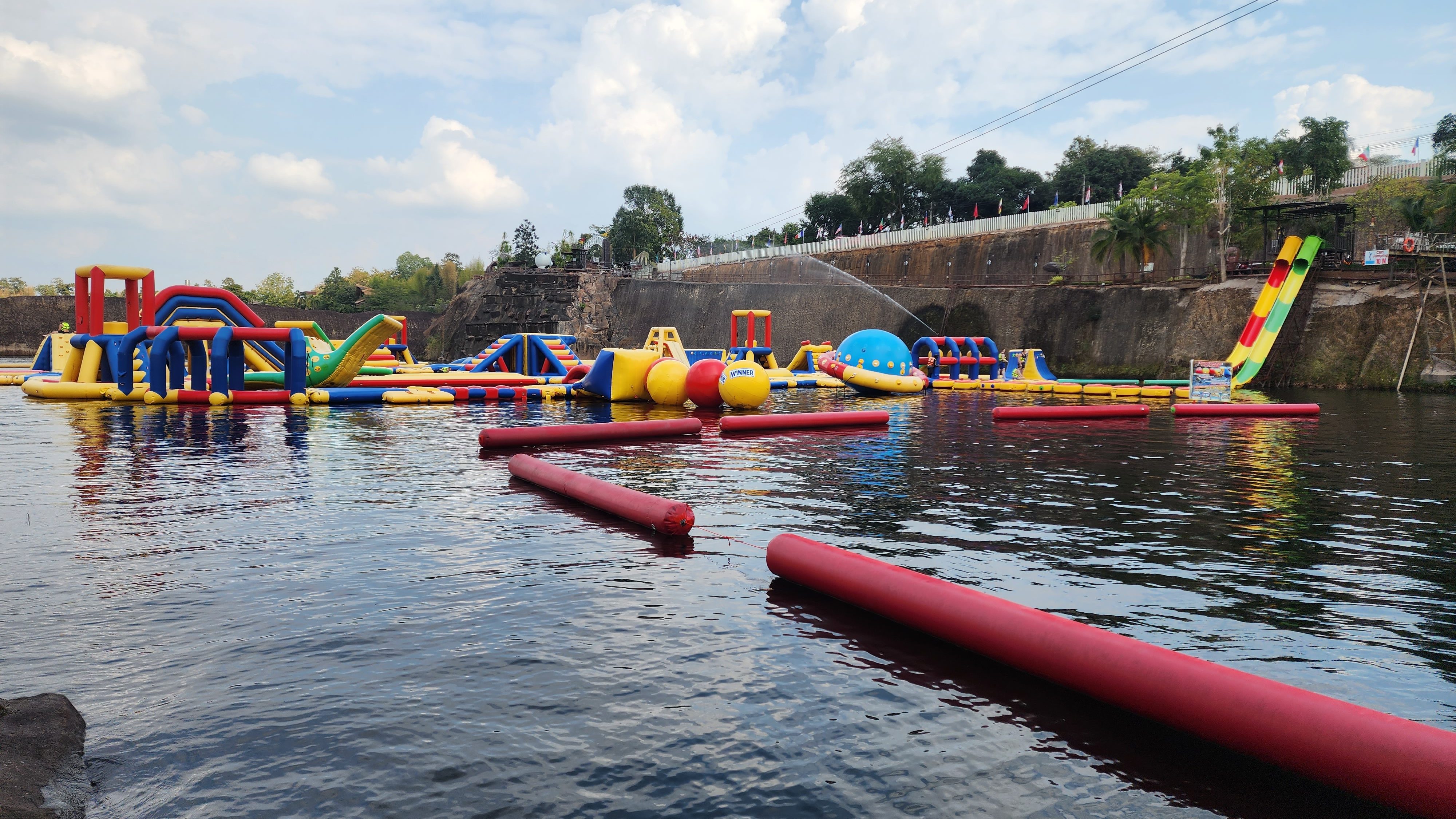
It’s time to visit the Grand Canyon! Like yesterday, hop in a Songthaew headed to your destination… the Grand Canyon Water Park. Please note, contrary to popular belief, the park is not actually in the Grand Canyon. Disappointing, I know. What isn’t disappointing though, is the water park. A large collection of inflatable obstacle courses, slides, diving boards, climbing walls, balls, massive inflatable ducks, and trampolines, make for the perfect grown-ups playground!
Rent out a locker to keep your things in, as you can’t bring anything into the water. That includes GoPros, though you can rent one from the front desk (bummer).
You can easily spend a few hours here without getting bored, though you’ll probably drop from exhaustion first.
After returning from the water park, have a laid-back afternoon, you’ve earned it.
Day 5 – Temple Run
The Monks Trail
The Monks Trail is an aptly named hike between hilltop temples that takes you through the peaceful forests in the hills just to the West of the city. Starting from this trailhead, the hike is 1.5km, straightforward, and not that steep. The trail ends at the serene Wat Pha Lat, a well-preserved complex of temples and shrines where you can really see nature in harmony with the stunningly carved figures and architecture.
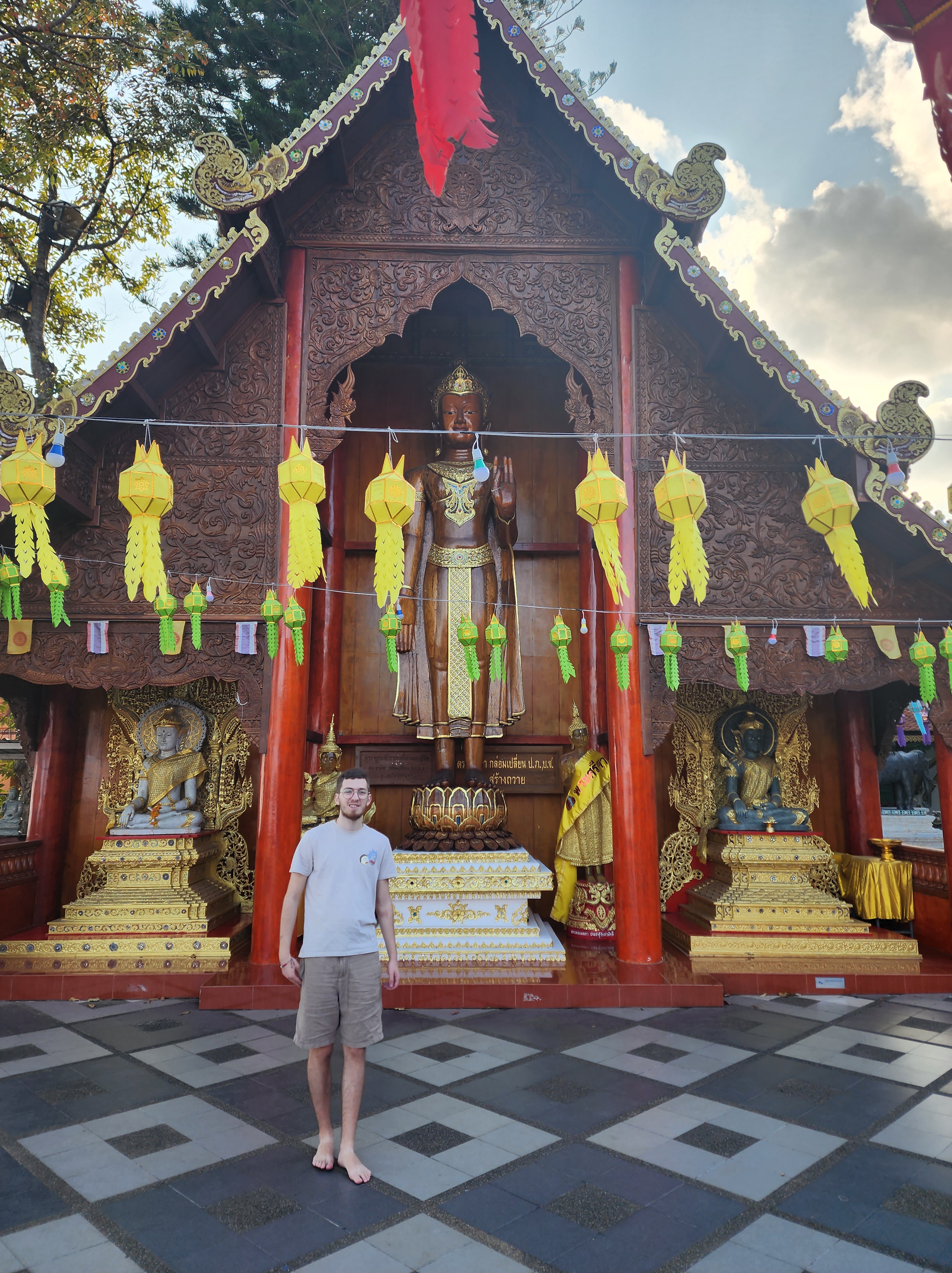
Doi Suthep
From here you can choose to head back to the city by waving down a Songthaew on its way back from Doi Suthep, or, if you still have the energy, you can head just 100 meters up the road to the trail which leads to Doi Suthep. This trail is somewhat more challenging than the first, it should take you between an hour and 90 minutes. Alternatively, if you still want to go to Doi Suthep but not to hike your way there, you can wave down a Songthaew on its way up.
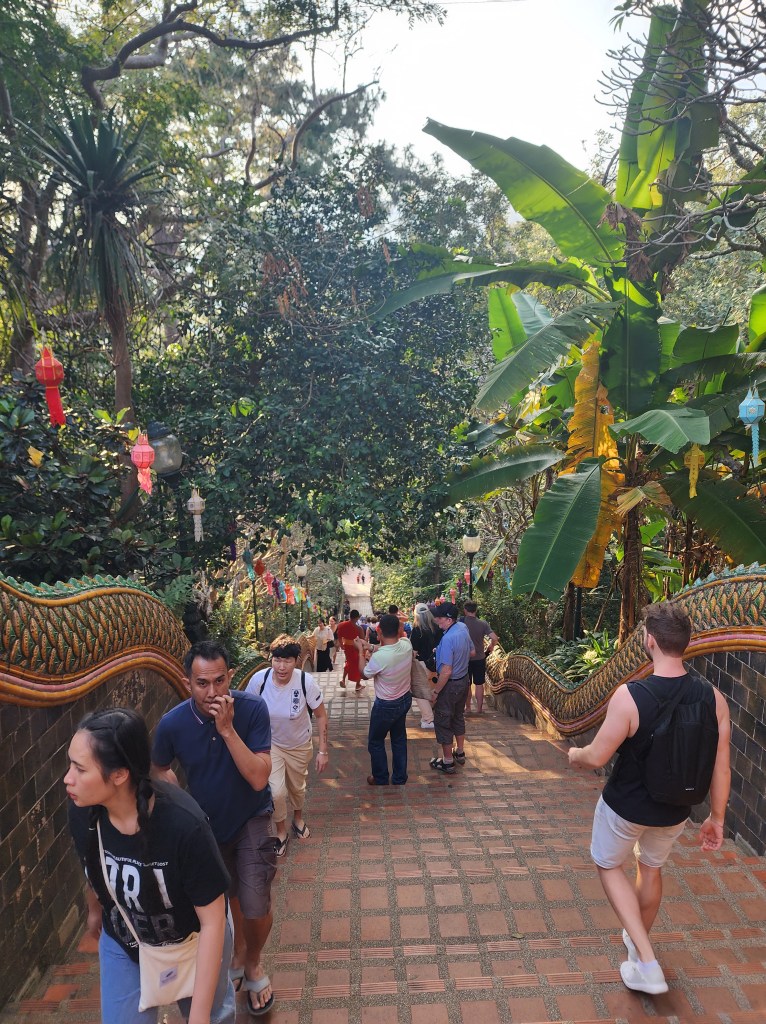
Being a very popular attraction, Doi Suthep may not be nearly as peaceful as Wat Pha Lat (in fact, it’s positively buzzing with energy), but it’s well worth a visit. Once the trail meets the main road, continue going until you see the massive Nagra staircase, trust me, you can’t miss it. If you come by Songthaew they’ll probably drop you off here. The temple is waaaayyyy up all those steps, so brace yourself for one last climb.
There’s an entrance fee of 50 baht.
Doi Sutheps main sanctuary is a stunning temple, with its glowing golden chedi and expansive view as the main highlights. To get back to Chiang Mai you can either hike back down or jump on one of the many Songthaews waiting on the main road.
Nighttime Activities:
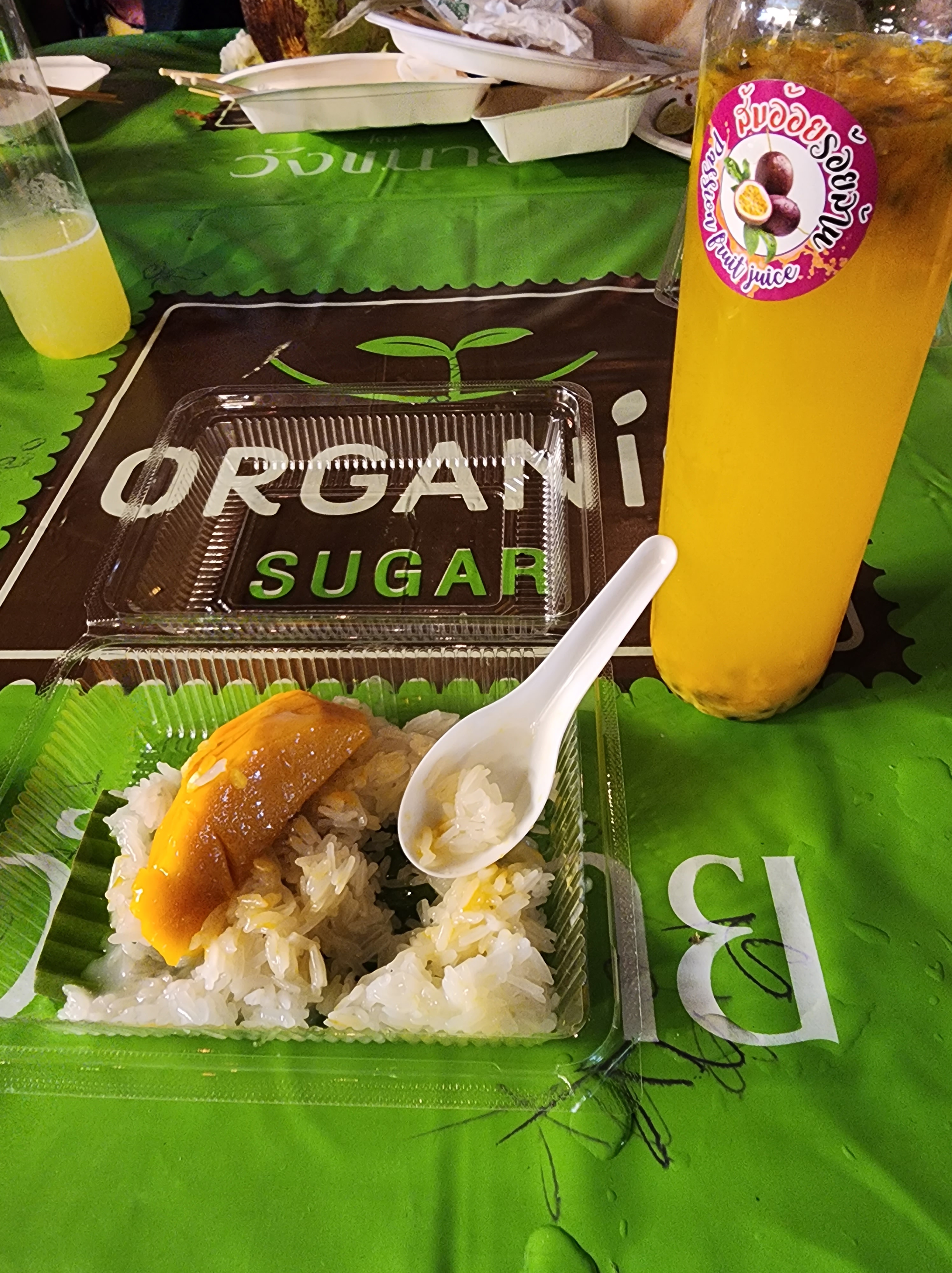
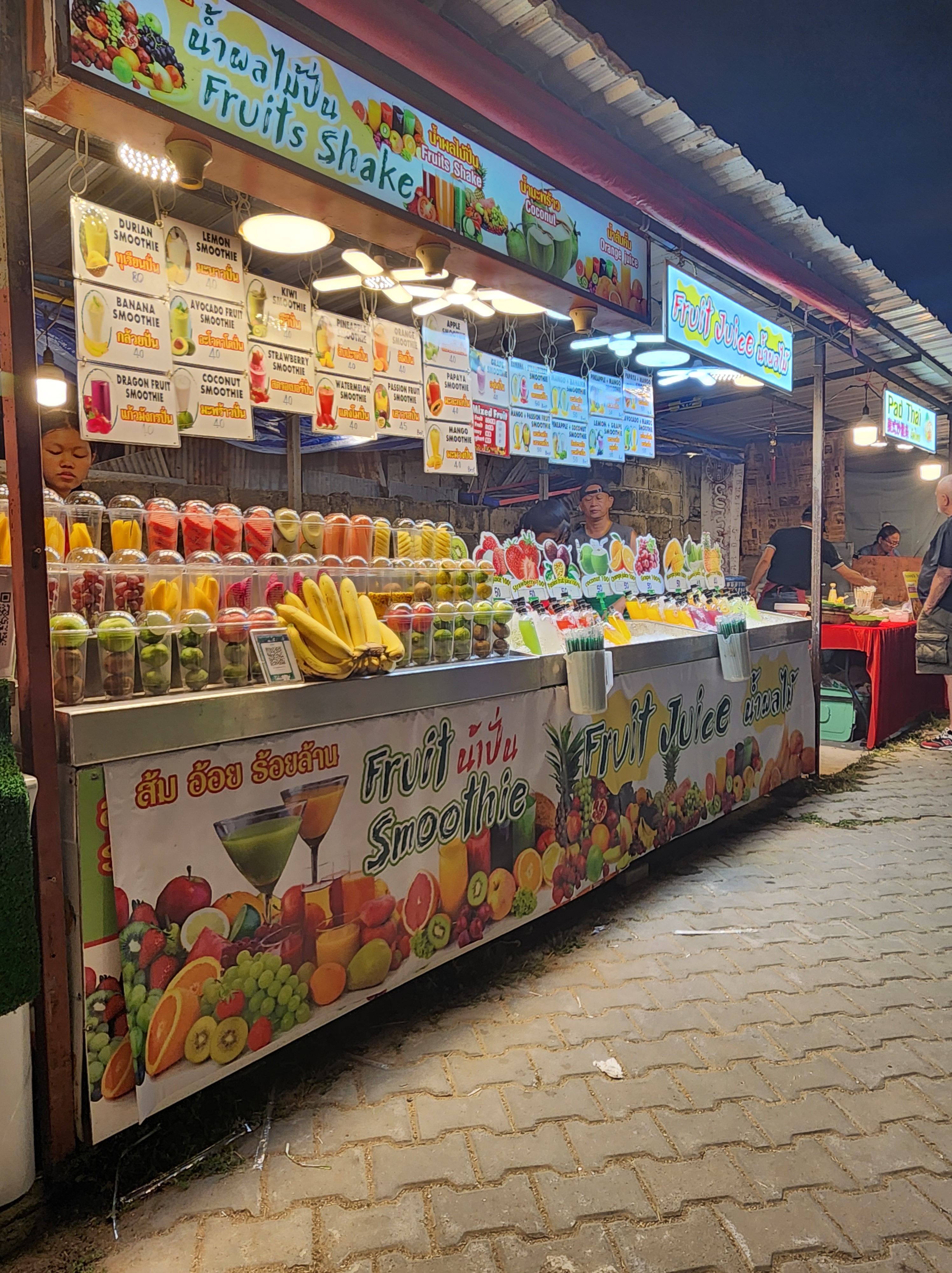
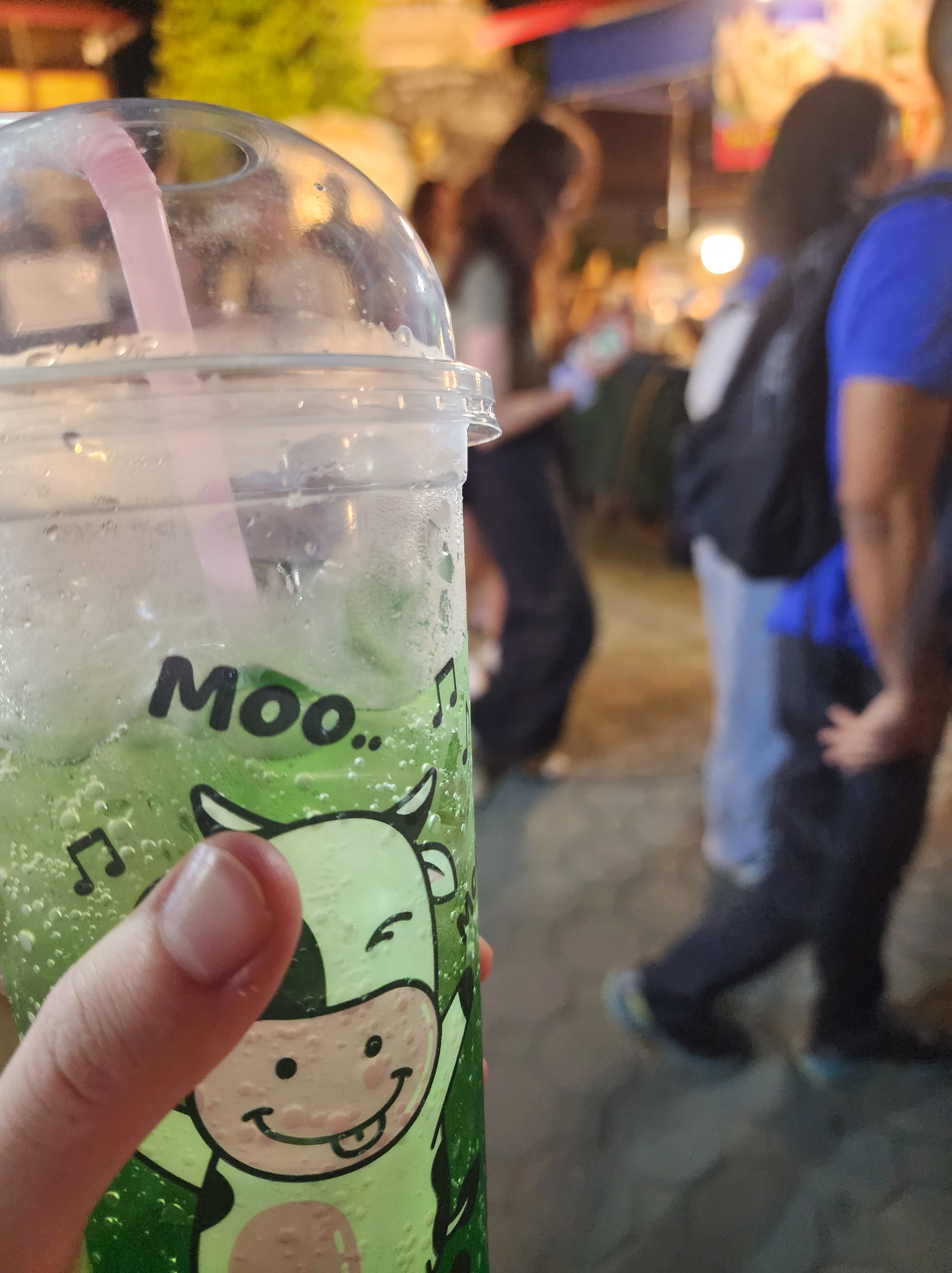
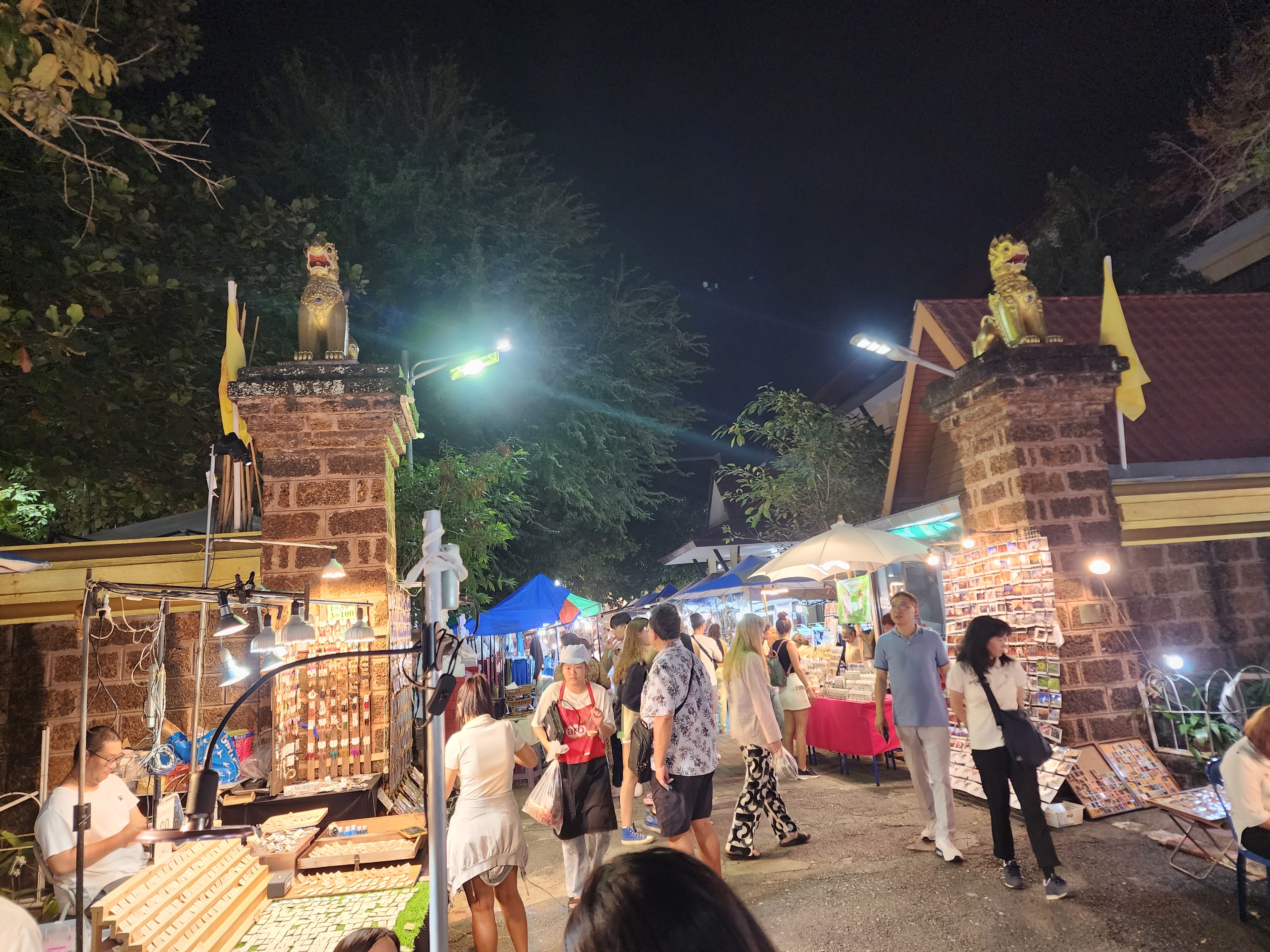
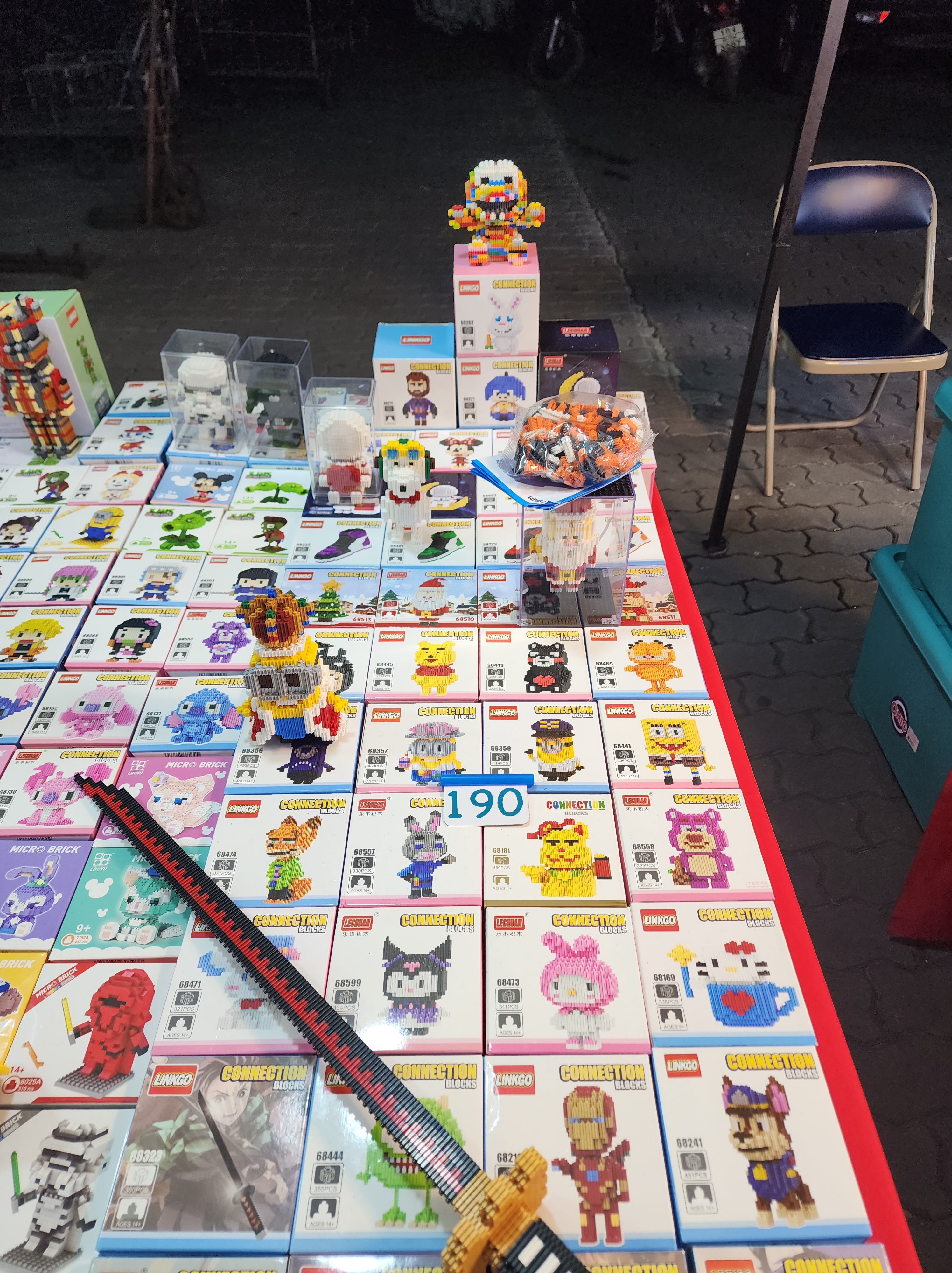
Browse the iconic night markets: Along with its temples, Chiang Mai is also well known for its amazing night markets. There’re many to choose from (see my map below) but the main three are definitely:
Sunday walking street
Where: Along the entire length of Rachadamnoen Rd and branching out into many side streets and temple courtyards. (Tha Phae Gate to Suan Dok Gate). 📌
When: 5 pm-10 pm every Sunday (some stalls may open a bit late).
What: Enormous night market with a near infinite amount of art, clothes, jewellery, and food for sale. Some food courts are located in temple courtyards, making for quite a unique experience.
Wua Lai Walking Street Saturday Market
Where: Wu Lai Rd. Just across the moat from Chiang Mai Gate 📌
When: 6 pm-11 pm Saturday nights.
What: A compact but buzzing and colourful night market that really outdoes it’s small size.
Chiang Mai Night Bazaar
Where: Changklan Rd. A fifteen minute walk East from Tha Phae Gate📌
When: Every night, 5 pm-12 am
What: The cities largest week-long night market
Watch some Muay Thai: Something you can’t miss doing while Thailand, Muay Thai is the Thai national sport (it’s in the name after all) and Chiang Mai is a great place to catch an event (or left to the jaw if you’re the one fighting 🥴). The best stadiums to watch at are: Tha Phae Boxing Stadium 📌, Chiang Mai Boxing Stadium 📌, and Kalere night market stadium 📌. The fights aren’t as high level as they are in the major Bangkok arenas, but they’re still a great spectacle, especially if you haven’t watched a lot of Muay Thai before.

See Wat Sri Suphan lit up at night: This silver temple is lit up every Saturday night until 9:30 pm. You can find it right at the end of Saturday night walking street so make it a quick stop while you peruse the market. Entry is 50 baht. If you come during Saturday by day you can keep the ticket and use it for the night entry.
Have a night out: There are plenty of great spots to grab a drink ranging from peaceful rooftop bars, to raging night clubs. I’ve compiled some of the best spots in my Google map (see last section). My quick fire recommendations are North Gate Jazz co-op for excellent live music, The White Rabbit for cozy vibes and fancy cocktails, and Zoe’s in Yellow (club) and its surrounding bars such as Rocks Roots (reggae bar) and The Gasoline (karaoke) for a night out to not remember.
Where to Stay
When it comes to hostels, Chiang Mai has no shortage and no lack of range. There are hostels to fit all budgets and needs, from boujee, villa-with-a-dorm hostels, to bare bone basic party hostels, you’ll find them here. Here are a few hostels I’ve either stayed at or heard many good things about (from people I met, not just online reviews).
Family Home 1 (& 2)
My first hostel in South East Asia and it did not disappoint! A very laid back hostel where it was still really easy to meet people and be sociable without ever being loud and dirty (like the many party hostels which sacrifice quality for fun).
With events organised every night together with Family Home 2, (which is just down the road), daily trips to the sticky waterfalls, free coffee and filtered water, a common room with books, a tv, console, and games, and access to Family Home 2’s similar but larger and more “happening common space”, Family Home is the perfect spot for anyone looking to have a good time while still in a peaceful and calm setting.
The dorms are great and kept sparkling clean. The beds are firm but spacious comfy (as long as you like them firm), and they’re well sized lockers to keep your valuables in, as well as personal lights, curtains, and wall sockets.
Revolution Old Town
My first experience in a South East Asian “party hostel” was at this hostels old location, just months before they moved. On a whole, the hostel had a lot going for it; Great staff, fun events (including a pub quiz which was won by yours truly), good location, and free family dinners. Buuuuuuut… the rooms and bathrooms were not great. Now though, they’ve moved to their new premises, which are far more spacious, cleaner and comfier.
As regard to it being a party hostel, unlike other SEAsia hostels that I felt were given the title unfairly, this definitely is a party hostel. It’s not too crazy though, and there’s a quiet rule from 10 pm. On the plus side, the hostel is very social, and they serve free communal dinner every night!
Entaneer Poshtel
It’s in the name, it’s a posh hostel. Entaneer is modern, spacious, and squeaky clean. Also; No bunkbeds! Yes, even in the dorms. Also; Daily activities including a free cooking class! Also; a kitchen to use!! Most hostels in Thailand don’t have kitchens for you to use so this is a big thing, if you like cooking for yourself or you’re using your own pot/pan for dietary reasons such as kosher.
Hidden Garden
A stylish and chic hostel which still has a strong social side, though I never stayed here I kept hearing rave reviews while in Thailand.
Stamps Backpackers
The gold standard of social hostels, I’m actually coming to dislike this hostel just because of how many fellow solo travellers keep telling me how much I missed out! Stamps is an extremely social hostel, with multiple daily excursions and activities every night. The hostel is close to Tha Phae Gate so it’s super central.
Where to Eat
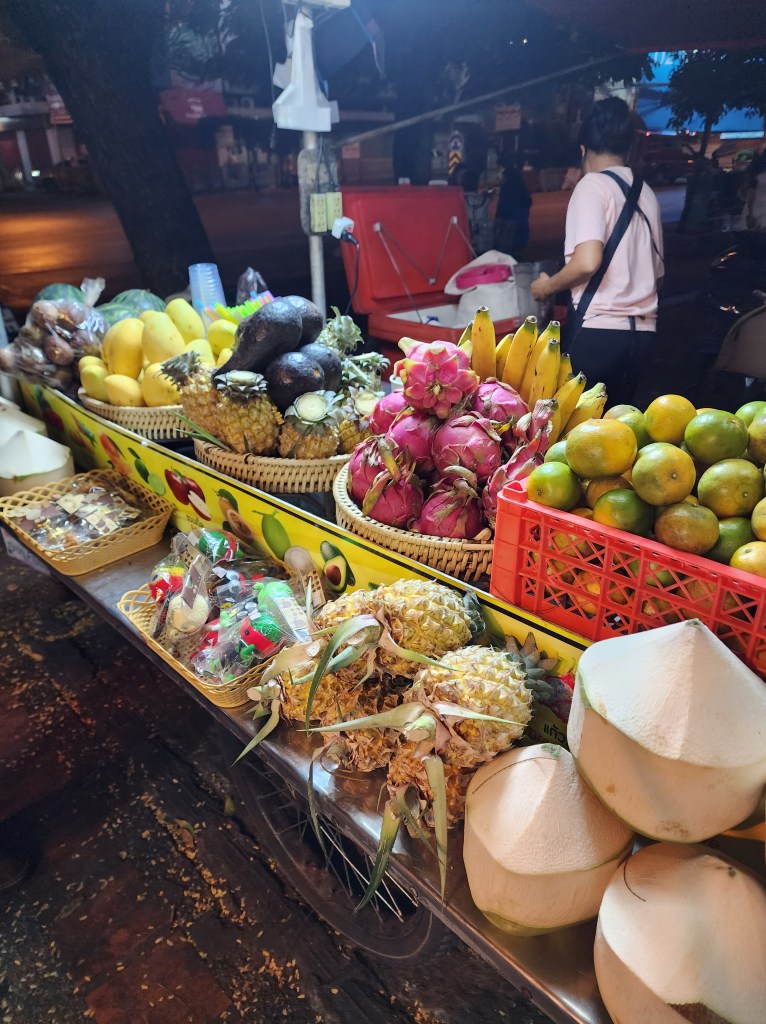
When it comes to places to eat, I have very few words to tell you besides… Night Markets.
No seriously, the only places I ate at were street stalls, night markets, Chabad, and a fully vegan place called Vegan Heaven. There are many places I had recommended but couldn’t try because I keep kosher. Though I don’t have anything to say on those, they did come recommended after all, so I’ve included them on my map below.
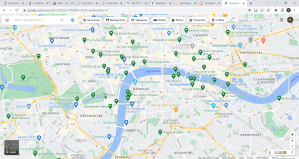
Download my Map
Sponsor a drink!
Make a monthly donation
Make a yearly donation
Enjoying the blog? Consider sponsoring a drink. Every little bit helps me turn my dream of showing just how accessible and fulfilling travel can be; into more than just a dream. Oh and that map took awhile to make 😝
Coffee – Smoothie – Night out
Or enter a custom amount
Thanks a Million! and back 😉
Your contribution is appreciated.
Your contribution is appreciated.
DonateDonate monthlyDonate yearly


 Sitch Travels
Leave a comment